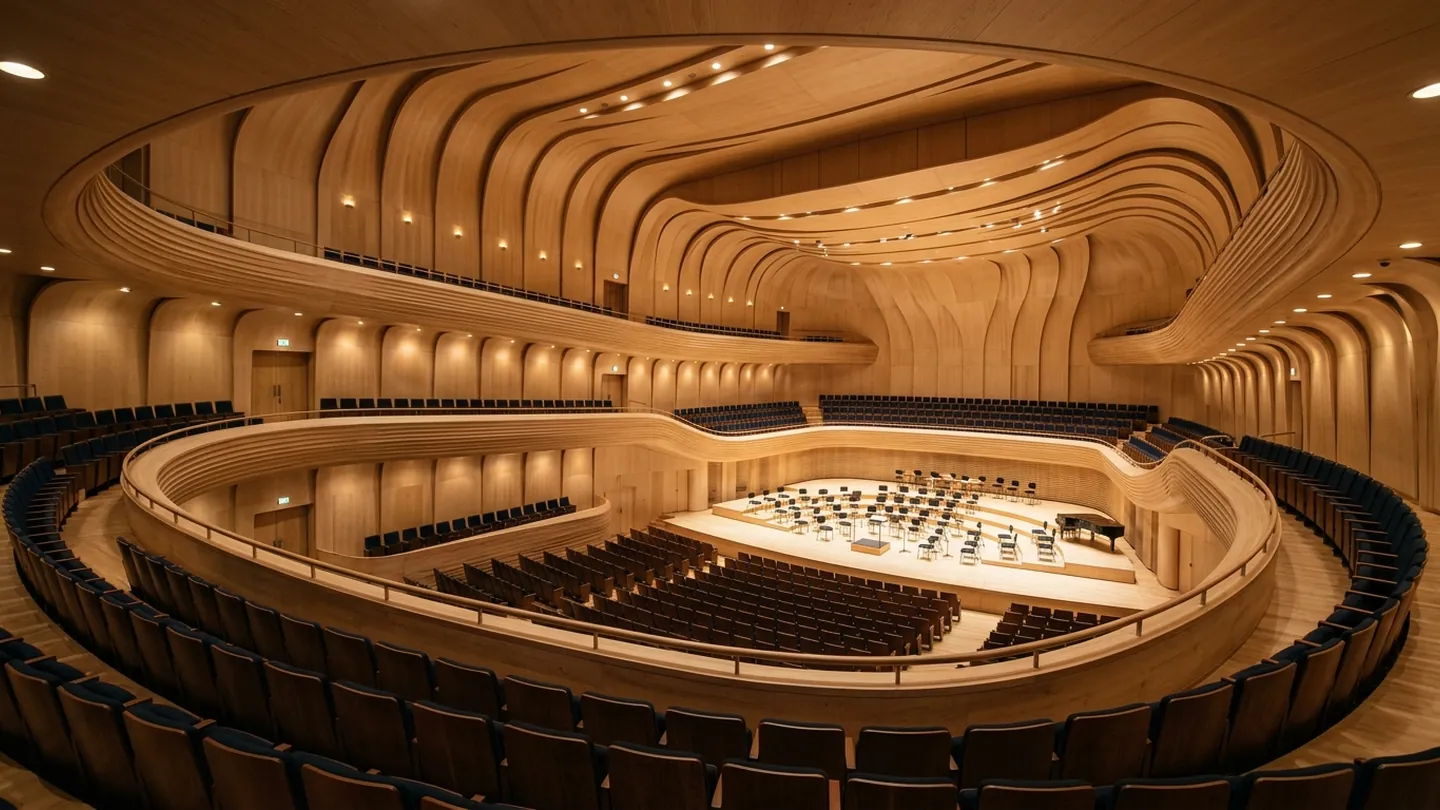
Sit in the twelfth row of a classic nineteenth-century shoebox recital room—barely twenty-one meters wide, lined in aged plaster and dense hardwood—and a solo cello pianissimo arrives at your ears within eighteen milliseconds of the direct bow stroke via crisp lateral wall reflections. For half a century, civic ego favored 2,400-seat fan-shaped concrete auditoriums where early lateral reflections vanished into vast overhead volumes.
CNC-milled birch diffusion ribs tuned to 1.9 seconds
A wave of 650-to-900-seat regional halls completed between Lahti, Trondheim, and Graz has returned to narrow shoebox proportions built almost entirely from kiln-dried Nordic birch and spruce. Acousticians carve undulating 14-millimeter flutes across wall panels to diffuse harsh 3-kilohertz violin glare while preserving a warm 1.95-second mid-frequency reverberation time.
Regional touring circuits and lower ticket thresholds
Because structural glulam frames assemble in fourteen weeks on site, municipal capital budgets stay below €38 million—less than a fifth of flagship waterfront opera houses—allowing box offices to price front-balcony chamber seats at €24. That human-scaled venue logic parallels both compact club-owned football grounds and reader-supported small literary presses.