Search stories across The Veridian Chronicle

Esc Close⌘K Toggle
Enter searches everything
Technology

Optical chiplet interconnects cut rack-level idle power in regional data halls

Replacing short-reach copper twinax cables with co-packaged silicon photonics allows European colocation operators to cool dense inference clusters without expanding substation transformers.

Kenji Takahashi

November 8, 2026 · 4 min read

Share this dispatch

Optical chiplet interconnects cut rack-level idle power in regional data halls

Optical chiplet interconnects cut rack-level idle power in regional data halls
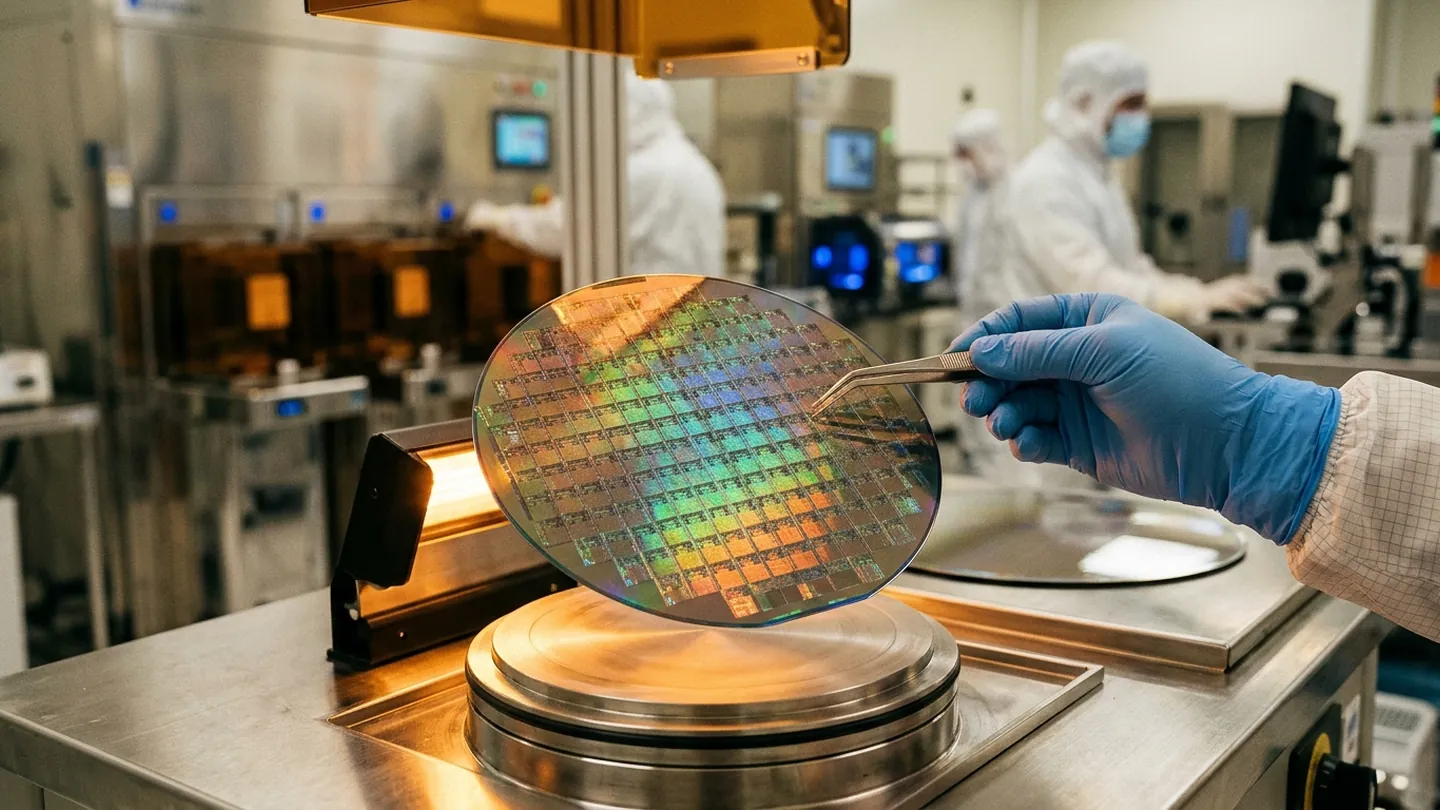
Cleanroom inspection of a 300mm silicon photonic interposer wafer prior to fiber array bonding. Veridian Tech.
Optical chiplet interconnects cut rack-level idle power in regional data halls

Cleanroom inspection of a 300mm silicon photonic interposer wafer prior to fiber array bonding. Veridian Tech.

OSAKA — VERIDIAN DESK

Inside a suburban Frankfurt colocation hall constrained by a strict 18-megawatt municipal grid cap, hardware engineers are squeezing 22 percent more compute throughput out of the exact same transformer footprint. Their lever is neither a smaller transistor node nor exotic immersion fluid, but eliminating thousands of power-hungry copper retimer chips between adjacent server trays.

Moving laser modulation onto the package substrate

At signaling speeds of 224 gigabits per lane, electrical copper traces lose signal integrity beyond roughly forty centimeters, forcing board designers to insert digital signal processors that burn 14 to 18 watts per port even during partial idle windows. Co-packaged optical engines bond micro-ring silicon modulators directly beside accelerator dies, transmitting light across hair-thin single-mode fibers spanning four racks at under 4.2 picojoules per bit.

Field serviceability remains the chief hurdle

Data-hall technicians accustomed to swapping pluggable transceivers in ninety seconds have pushed back against soldered laser sources, prompting vendors to place external continuous-wave laser modules in hot-swappable front bays. Combined with synchronous flywheel ride-through banks and audited under municipal grid connection rules, optical backplanes are moving from laboratory testbeds into production colocation cages.


Share this dispatch

Optical chiplet interconnects cut rack-level idle power in regional data halls

Reader letters (0)

Moderated by the letters desk · Private emails are never published

No published reader letters on this dispatch yet. Write the first response below.

Send a letter to the editor

Concise responses citing firsthand field experience or data may be featured beneath the story.

Weekday Briefing

The morning edition, in your inbox.

Five dispatches worth your quiet coffee, chosen by our desk editors every weekday at 06:30 CET.