Search stories across The Veridian Chronicle

Esc Close⌘K Toggle
Enter searches everything
Self-bailing carbon hulls push offshore coastal rowing into Olympic waters
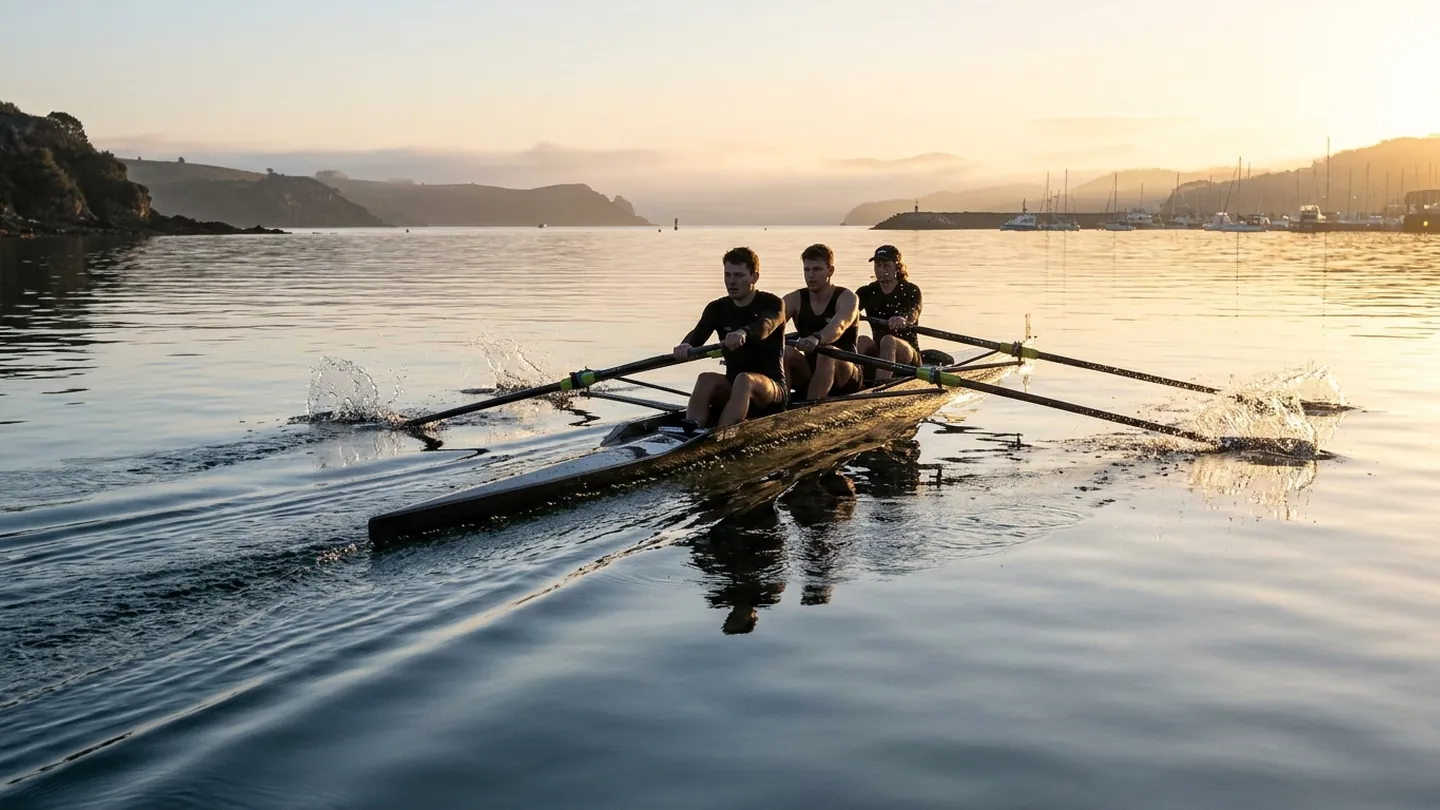
A coastal quadruple scull punching through morning harbor chop during sea-trial intervals. Veridian Sport.
Self-bailing carbon hulls push offshore coastal rowing into Olympic waters

A coastal quadruple scull punching through morning harbor chop during sea-trial intervals. Veridian Sport.

Sport

Self-bailing carbon hulls push offshore coastal rowing into Olympic waters

Wider sterns, open transoms, and surf-launch sprints are drawing flat-water rowers out of sheltered regatta canals and into unpredictable harbor swells.

Callum Reid

October 23, 2026 · 4 min read

Share this dispatch

Self-bailing carbon hulls push offshore coastal rowing into Olympic waters

MARSEILLE — VERIDIAN DESK

Traditional 2,000-meter flat-water rowing requires a two-kilometer artificial lake sheltered from crosswinds, a fleet of fragile 27-centimeter-wide shells, and lane buoys tensioned to millimeter tolerances. When wind gusts raise fifteen-centimeter whitecaps, regatta juries postpone racing for hours. Coastal beach-sprint and endurance sculling turns waves from a cancellation hazard into the tactical core of the race.

Open transoms and 35-kilogram minimum hull rules

Under World Rowing's coastal boat class specifications, solo and quadruple hulls measure roughly twice the beam of flat-water shells, carry flared bows to ride over one-meter surf, and feature open self-bailing sterns so breaking waves drain immediately on the recovery stroke. Strict minimum hull weights and standardized carbon-glass layups prevent wealthy federations from buying marginal hydrodynamic advantages.

Zero-infrastructure regattas on city waterfronts

Because courses anchor three turning buoys off any public beach or harbor mole, host cities avoid dredging multimillion-euro regatta basins—echoing the urban accessibility of harbor marathon swim loops and inner-city club stadiums. Junior coastal club memberships across Atlantic ports rose 34 percent over the past two summers.

Share this dispatch

Self-bailing carbon hulls push offshore coastal rowing into Olympic waters

Reader letters (0)

Moderated by the letters desk · Private emails are never published

No published reader letters on this dispatch yet. Write the first response below.

Send a letter to the editor

Concise responses citing firsthand field experience or data may be featured beneath the story.

Weekday Briefing

The morning edition, in your inbox.

Five dispatches worth your quiet coffee, chosen by our desk editors every weekday at 06:30 CET.